Immerse yourself in the cultural capital of India while discovering emerging Buddhist heritage. This 2N/3D integrated tour blends Kolkata’s living spiritual centers (Ramakrishna Paramahamsa legacy, Hindu temples, colonial heritage) with West Bengal’s most significant Buddhist archaeological excavation at Mogalmari. All accommodation in Kolkata ensures maximum convenience for travelers arriving or departing via Netaji Subhas Chandra Bose International Airport or Howrah Railway Station. Perfect for pilgrims, scholars, cultural explorers, and families seeking multi-layered heritage discovery.
DAY TRIP ITINERARY
DAY 1: ARRIVAL IN KOLKATA AND RAMAKRISHNA PARAMAHAMSA SPIRITUAL HERITAGE
Morning Arrival and Hotel Check-In (Flexible timing based on flight/train)
Arrive at Netaji Subhas Chandra Bose International Airport or Howrah Railway Station in Kolkata. Complimentary airport/station transfer arranged by Ocean6 Holidays. Check in at your pre-booked heritage hotel in central Kolkata (options include Taj Bengal, ITC Royal Bengal, Peerless Inn, or comparable 4 to 5-star properties offering heritage appeal and modern comfort).
Note on timing: Day 1 itinerary is flexible based on arrival time. If arriving early morning (5:00 AM to 8:00 AM), you can begin activities immediately after breakfast. If arriving afternoon/evening, Day 1 becomes an orientation and rest day, with full activities beginning Day 2 morning.
Post-Arrival Rest and Lunch (12:00 PM to 2:00 PM)
Rest at your hotel, freshen up after travel. Lunch at hotel restaurant or nearby local establishment (Kolkata’s Bengali cuisine: luchi, alur dom, fish curry, payesh dessert). Settle into accommodation, confirm timings for Day 1 afternoon activities.
Afternoon: Dakshineshwar Kali Temple and Ramakrishna Paramahamsa Heritage (2:30 PM to 6:30 PM)
Approximately 45 minutes driving from central Kolkata to temple complex
Depart hotel northward toward Dakshineshwar, located on the eastern bank of the Hooghly River. This is one of India’s most revered Hindu temples and the spiritual center associated with Sri Ramakrishna Paramahamsa, one of India’s greatest saints and spiritual philosophers.
Temple Complex Exploration (approximately 120 minutes)
Guided exploration of Dakshineshwar Kali Temple (built 1855 by Rani Rashmoni):
Main Temple Structure
- Navaratna (nine-spired) architectural style, iconic of Bengal temple design
- Square laterite plinth with imposing brick structure
- Sanctum sanctorum (inner chamber) housing the idol of Bhavatarini (Goddess Kali)
- Kali depicted standing on the chest of the supine Lord Shiva, both placed on a thousand-petaled silver lotus
- Three circumambulatory galleries with ornate decorative work
Secondary Structures
- Twelve Shiva temples arranged in a row along the riverside, each with black stone Shiva lingams
- Radha-Krishna temple (popularly called Radha Kanta temple)
- Rani Rashmoni’s shrine and memorial spaces
- Bathing ghat (riverfront steps) for ritual ablution
Sri Ramakrishna Paramahamsa Heritage Engagement (approximately 60 minutes)
Visit the Nahavat-Khana (chamber in the northwestern corner), the room where Sri Ramakrishna Paramahamsa spent approximately 14 years of his life engaged in intensive spiritual practice and teaching. This modest chamber has profound historical significance in Hindu and interfaith spiritual history.
Interpretive focus:
- Ramakrishna Paramahamsa (1836-1886): Bengali saint, mystic, and spiritual philosopher whose life and teachings bridged Hindu devotional practice with interfaith spirituality
- His spiritual experimentation: intensive practice of multiple Hindu traditions (Kali worship, Vedantic meditation, devotion to Krishna and Radha) within a single lifetime
- His famous dictum: “Many are the names of God and infinite the forms through which he may be approached”
- His disciples and the Ramakrishna Order: Students like Swami Vivekananda carried his teachings globally, bridging East and West spiritually
- Connection to Kolkata’s cultural renaissance: Ramakrishna was a contemporary of many of Bengal’s intellectual and artistic leaders
Museum and Artifact Viewing
- Small museum within temple complex displaying artifacts used by Ramakrishna, personal belongings, photographs, and devotional items
- Biographical displays in Bengali and English
River Experience
- Walk along the riverside ghat, observing the Hooghly River, pilgrims, and the rhythmic spiritual life of this sacred center
- Optional: Sit in quiet reflection near the bathing ghat, watching the light change across the water
Evening Artis (Optional)
- Evening prayer rituals are performed at the temple (timing varies by season; approximate 6:00 PM to 7:00 PM in winter months)
- Observe bhakti (devotional) worship with conch shells, bells, and mantras
Return to Hotel and Evening Leisure (6:45 PM to 9:00 PM)
Drive back to central Kolkata (approximately 45 minutes). Dinner at hotel restaurant or local Bengali restaurant. Early rest to prepare for Day 2’s full-day Mogalmari excursion.
Overnight Stay: Kolkata Heritage Hotel (Taj Bengal, ITC Royal Bengal, Peerless Inn, or comparable 4 to 5-star property)
Amenities: Luxury AC rooms, attached bathrooms with premium toiletries, 24-hour room service, multi-cuisine restaurants, WiFi, business center, concierge assistance.
DAY 2: FULL-DAY MOGALMARI BUDDHIST ARCHAEOLOGICAL EXPEDITION FROM KOLKATA
Very Early Morning Departure (5:00 AM to 5:30 AM)
Depart from your Kolkata hotel southwestward via dedicated AC private vehicle. Complimentary morning tea, coffee, and light snacks provided in vehicle. Early departure maximizes on-site exploration time at Mogalmari and allows return to Kolkata by evening.
Journey overview: Kolkata to Kharagpur via NH-6 (approximately 120 km, 2 to 2.5 hours).
Mid-Morning Arrival at Kharagpur and Site Orientation (8:00 AM to 8:25 AM)
Brief 20-minute stop in Kharagpur town for refreshment and archaeological briefing. Your specialist guide orients you to Mogalmari’s significance as West Bengal’s largest excavated Buddhist monastery complex (6th-12th century CE), preparing you for intensive engagement with the site.
Journey to Mogalmari (8:25 AM to 9:55 AM)
Northeastward drive via NH-16 toward Mogalmari village (approximately 63 km, 90 minutes). Transition through rice plains and rural Bengal landscape provides context for understanding the monastery’s historical settlement patterns and regional trade significance.
INTENSIVE MOGALMARI SITE EXPLORATION (10:00 AM to 1:30 PM)
Total on-site engagement: Approximately 3.5 hours
Station 1: Sakhisena Mound and Excavation Zones (35 minutes)
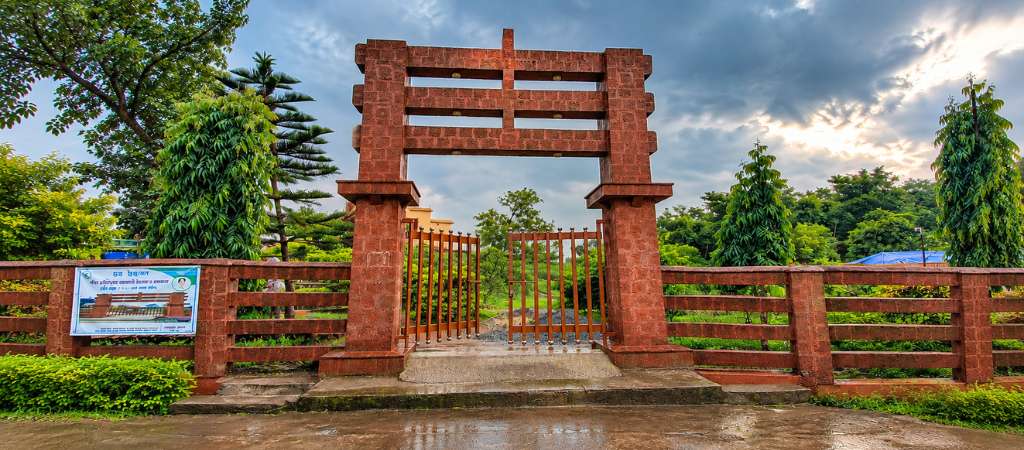
Arrive at Mogalmari Bauddha Mahavihara. Walk the Sakhisena mound, the primary excavation revealing West Bengal’s largest monastic complex. Observe exposed brick structures, monastic cell foundations, votive stupas, and artifact distribution patterns indicating two major construction phases (6th-7th century CE and later 11th-12th century rebuilding).
Your guide explains archaeological stratigraphy, the monastery’s construction timeline, layers revealing occupation and abandonment cycles, and what material evidence tells us about daily monastic practice and community organization.
Station 2: The Stucco Wall Complex and Decorative Sculpture (70 minutes)
Enter the protective plastic-covered structure housing the western wall, Mogalmari’s centerpiece archaeological feature. Close examination of intricate stucco figures, floral motifs, votive tablets, and life-size sculptural forms (6th-7th century CE).
Interpretive themes:
- Buddha imagery: Seated, standing, and recumbent Buddha forms
- Bodhisattva figures: Celestial beings assisting in salvation narratives
- Syncretic deities: Jambala (Hindu wealth deity), Saraswati (Hindu goddess of learning), demonstrating Vajrayana Buddhism’s integration of regional spiritual traditions
- Stucco as medium: Why artisans selected terracotta, lime plaster, and brick for ornamentation in Bengal’s subtropical monsoon climate
- Artistic connections: Influence of Gupta artistic traditions and connections to Nalanda monastery’s artistic programs
- Vajrayana iconography: How visual imagery served liturgical and pedagogical functions in monastic education
Descent via steep metallic staircase (with handrails and staff assistance available) provides intimate access to decorative details. Allow 25 to 30 minutes for careful descent, close viewing, and ascent.
Station 3: On-Site Museum and Artifact Documentation (50 minutes)
Visit the small club-converted museum atop Sakhisena mound. Examine key artifact categories:
- Bronze Buddhist deities and Bodhisattva statuary (6th century CE, reflecting Gupta artistic tradition influence)
- Votive tablets with Buddhist iconography and inscriptions
- Seals and sealings bearing post-Gupta Brahmi script inscriptions
- Terracotta figurines, decorative architectural elements, and vessel ceramics
- Mixed-metal coins and gold coins bearing the name of King Samachardeva (pre-Pala dynasty)
- Gold pendants, ring fragments, and crown pieces
The guide clarifies evidence hierarchy: what is archaeologically verified from excavation reports and scientific documentation versus scholarly interpretation versus regional oral tradition. Museum displays photographic documentation of excavation phases, artifact discovery contexts, and conservation work.
Station 4: Pradikshana Path and Votive Stupas (25 minutes)
Walk the circumambulatory (pradikshana) path revealed during 2012 excavations along the eastern and southern sections of the monastic complex. Observe votive stupas and understand Buddhist ritual-use patterns: how circumambulation served both practical community gathering and spiritual devotional function.
Optional: If time permits and pilgrim interest aligns, offer guided circumambulation or silent meditation at the site.
Lunch and Personal Reflection (1:15 PM to 1:45 PM)
Packed lunch served at the site or nearby shaded area (vegetarian and non-vegetarian options, fresh water, tea/coffee). Travelers rest and reflect on the morning’s archaeological engagement while observing the mound and surrounding agricultural landscape.
AFTERNOON RETURN JOURNEY AND KOLKATA EVENING ENGAGEMENT (1:45 PM to 8:00 PM)
Departure from Mogalmari and Return Journey (1:45 PM to 5:15 PM)
Depart Mogalmari by 1:45 PM. Return northwestward via NH-16 to Kharagpur (approximately 90 minutes), then continue to Kolkata via NH-6 (approximately 2 to 2.5 hours).
Total return distance: Approximately 180 to 185 km; approximately 3.5 to 4 hours combined driving.
Your guide provides retrospective commentary on the day’s experience, contexualizing Mogalmari within larger Buddhist heritage networks and connecting 6th-12th century Buddhist monastic civilization to contemporary pilgrimage cultures.
Arrival at Kolkata and Evening Activity (5:15 PM to 8:00 PM)
Arrive back at hotel by approximately 5:30 to 6:00 PM. Freshen up and choose from optional evening activities:
Option A: Belur Math Spiritual Immersion (5:30 PM to 7:30 PM)
Visit Belur Math, headquarters of the Ramakrishna Math and Mission, founded by Swami Vivekananda in honor of Sri Ramakrishna Paramahamsa. This sprawling 40-acre complex on the western bank of the Hooghly River exemplifies interfaith spiritual architecture.
Interpretation:
- Fusion architecture: Combines Hindu, Christian, and Islamic architectural motifs as a symbol of unity of all religions
- Main Ramakrishna Temple: Houses the relics of Sri Ramakrishna Paramahamsa
- Sarada Devi Temple: Enshrines the Holy Mother, Ramakrishna’s consort, revered as a spiritual teacher
- Vivekananda Temple: Built on the site where Swami Vivekananda was cremated in 1902
- Monastery and Museum: Displays artifacts, photographs, and writings of spiritual luminaries
- Evening atmosphere: Temples are illuminated and peaceful in late afternoon; ideal time for meditation and reflection
Evening Aarti (prayer ritual) may be observed if timing aligns (approximately 6:00 PM to 7:00 PM, depending on season).
Option B: Victoria Memorial and Evening Stroll (5:30 PM to 7:30 PM)
Visit Victoria Memorial, a monumental symbol of Kolkata’s colonial heritage and contemporary identity. Built in memory of Queen Victoria (completed 1921), this Indo-Saracenic revival structure stands majestically in a 64-acre garden complex.
Interpretation:
- Colonial history: British Raj architectural ambition and Indian cooperative response (built with donations from Indian royalty)
- Architectural fusion: Blends Victorian, Mughal, and Indian architectural elements
- Museums: Portrait galleries, Durbar Hall gallery depicting British and Indian cultural heritage, National Leader’s gallery honoring India’s freedom struggle
- Gardens: Among India’s finest maintained green spaces, with sculptures, fountains, and riverside walks
- Evening ambiance: Illumination creates dramatic visual effect; gardens peaceful and romantic
Option C: Rest at Hotel and Preparation for Day 3 (5:30 PM to 8:00 PM)
Return to hotel, freshen up, enjoy leisure time. Early dinner and rest to prepare for Day 3’s Kolkata cultural immersion.
Dinner and Evening (7:30 PM to 9:30 PM)
Multi-cuisine dinner at hotel restaurant. Relaxation and personal reflection on Day 2’s intensive Buddhist archaeological experience and comparison with Day 1’s Hindu spiritual centers.
Overnight Stay: Kolkata Hotel (Same accommodation as Day 1)
DAY 3: KOLKATA HERITAGE EXPLORATION AND DEPARTURE
Morning Flexibility (Based on Departure Time)
Day 3 timing depends on your flight or train departure. The itinerary offers three options:
Option A: Extended Morning (For departures after 3:00 PM)
Rise early (6:00 AM to 7:00 AM) for optional sunrise walk through hotel gardens or nearby parks. Substantial breakfast.
Morning Heritage Site Exploration (8:00 AM to 12:00 PM)
Choose from the following Kolkata heritage experiences:
Choice 1: Belur Math and Ramakrishna Monastery (if not visited Day 2 evening)
Full morning engagement with Belur Math, exploring temple complexes, museum, and monastic grounds. Morning atmosphere is peaceful; fewer crowds; ideal for meditation and cultural immersion.
Choice 2: Marble Palace and Historic Kolkata Mansions (if interested in colonial-era aristocratic heritage)
Visit Marble Palace (Paroshnath Dey Mansion), a 19th-century private mansion showcasing marble sculptures, paintings, and antique collections. Guided tour interprets the fusion of European and Indian aesthetics in colonial-era elite households.
Choice 3: Jorasanko Thakur Bari and Tagore Legacy
Visit the ancestral home of Rabindranath Tagore, Nobel Prize-winning poet, philosopher, and cultural renaissance figure. Museum displays Tagore’s personal belongings, manuscripts, and the cultural atmosphere of Bengal’s intellectual golden age (late 19th and early 20th centuries).
Lunch and Final Kolkata Engagement (12:30 PM to 1:30 PM)
Lunch at a heritage or contemporary restaurant, sampling Kolkata’s culinary traditions (Bengali sweets, fish preparations, street food like puchka and phuchka).
Departure Preparation and Airport/Station Transfer (1:30 PM onward)
Return to hotel, check out, settle any outstanding bills. Complimentary transfer to Netaji Subhas Chandra Bose International Airport or Howrah Railway Station for onward journey.
Allow additional 30 to 45 minutes for airport/station transit depending on traffic and time of departure.
Option B: Day Departure (Flight/Train departure between 9:00 AM and 2:00 PM)
Early Morning and Breakfast (8:00 AM)
Rise early, take complimentary light breakfast at the hotel. Pack belongings.
Departure (9:30 AM to 2:00 PM)
Complimentary transfer to airport or railway station. Tour concludes.
Option C: Same-Day Departure (Flight/train departure before 9:00 AM)
Early Check-Out (5:00 AM to 6:30 AM)
Wake early, quick breakfast, check out. Complimentary immediate transfer to airport or railway station.
The tour concludes without additional Day 3 activities.
TOUR HIGHLIGHTS
- Dakshineshwar Kali Temple: Navaratna architecture, Ramakrishna Paramahamsa heritage, sacred riverside setting
- Belur Math: Interfaith spiritual center, Ramakrishna Mission headquarters, fusion architecture
- Ramakrishna Paramahamsa legacy: 19th-century saint bridging Hindu and interfaith spirituality
- Kolkata Renaissance cultural figures: Tagore, Vivekananda, and Bengal’s intellectual golden age
- Mogalmari Bauddha Mahavihara: West Bengal’s largest excavated Buddhist monastery complex (6th-12th century CE)
- Sakhisena Mound: Two-phase structural development revealing occupational history
- Stucco Wall Complex: Vajrayana-period decorative sculpture with Gupta artistic influence
- Archaeological Artifacts: Bronze deities, votive tablets, seals, inscriptions, gold objects
- Pradikshana Path: Buddhist circumambulatory route and ritual architecture
- Victoria Memorial: Colonial heritage architecture and Indo-Saracenic fusion
- Marble Palace: 19th-century aristocratic mansion and art collection
- Jorasanko Thakur Bari: Rabindranath Tagore’s ancestral home and cultural legacy
- South Park Street Cemetery: Multicultural colonial history
- Rabindra Sarovar Lake: Natural heritage and community engagement
TOUR INCLUDES
- Ex. Your Kolkata Hotel, Netaji Subhas Chandra Bose International Airport, or Howrah Railway Station (Pickup and drop-off)
- AC Private Vehicle: Day 2 full-day Mogalmari excursion (Kolkata to Mogalmari and return, approximately 480+ km)
- Professional Archaeological Guide: Full Day 2 (specialist in Buddhist heritage, excavation interpretation, regional history)
- Professional Cultural Guide: Days 1 and 3 (Kolkata heritage sites, Ramakrishna Paramahamsa legacy, Indian spiritual traditions)
- Two Nights Accommodation: Central Kolkata heritage hotel or 4 to 5-star property (Taj Bengal, ITC Royal Bengal, Peerless Inn, or comparable)
- AC rooms, double/twin sharing, attached bathrooms with hot water, premium amenities
- Daily Breakfast at hotel (Days 2 and 3)
- Complimentary Tea and Light Snacks: Morning pickup Day 2 and transit breaks
- Packed Lunch: Day 2 at Mogalmari site (vegetarian and non-vegetarian options)
- All Sightseeing: Dakshineshwar Kali Temple, Mogalmari Bauddha Mahavihara, optional Day 3 Kolkata heritage sites as per selection
- Mogalmari Site Entry and Museum Access
- Optional temple/site entry fees (Dakshineshwar: free; Belur Math: free; Victoria Memorial: approximate Rs. 30 per person; others: minimal)
- All Local Transfers: Hotel to sites, site to site, return to hotel/airport/station
- Parking and Access Fees at all locations
- Complimentary Water and refreshments throughout
TOUR EXCLUDES
- GST (5% on total invoice amount, added at billing)
- Card Charges (3% if applicable)
- International Air Fare to Kolkata
- Domestic Train Fare to Kolkata
- Dinner on Days 1 and 2 (available at hotel restaurants or local establishments at guest’s cost)
- Personal Expenses (tips, beverages beyond complimentary offerings, souvenirs, shopping)
- Additional Kolkata heritage site entries not specifically included (e.g., Marble Palace, Tagore house, if not pre-selected)
- Travel Insurance
- Contingency Expenses
- Whatever is Not Mentioned in Tour Includes
BEST TIME TO VISIT
- October to March (Cool, dry season; ideal for daylong outdoor exploration and photography)
- Daytime temperatures: 18 to 28 degrees Celsius
- October-November and February-March: Peak season (comfortable weather, clear skies)
- Minimize: May to September (monsoon season; site muddy; extreme heat and humidity; limited comfort for full-day activity)
- Special Note: Mogalmari excavations are ongoing; site accessibility and conditions may vary seasonally. Confirm with operator one week before departure.
IMPORTANT INFORMATION
- Moderate fitness level required: Multiple hours of walking on uneven terrain, steep stairs descent/ascent
- Stucco wall exploration involves steep metallic staircase (handrails present; staff assistance available for elderly or mobility-limited visitors)
- Mounds feature uneven surfaces; sturdy, closed-toe footwear is essential
- Not recommended for travelers with severe mobility limitations or knee/joint issues
- Sturdy walking shoes (closed-toe, good ankle support)
- Sun hat or cap
- Sunscreen (SPF 30+)
- Water bottle (minimum 1.5 liters; refills available)
- Light sweater or jacket (early morning and evening can be cool)
- Backpack for personal items
- Camera (optional but recommended)
- Phone charger and power bank
- Any personal medications
- Comfortable, casual clothing appropriate for outdoor exploration
- Avoid very revealing or culturally insensitive attire (Buddhist site; modest dress appreciated)
- Layers recommended (morning cool; midday warm)
- Packed lunch provided; sufficient for most travelers
- Complimentary tea, coffee, and light snacks at departure and transit stops
- Bring extra water or electrolyte drink for personal hydration management
- No commercial food vendors at the Mogalmari site; plan accordingly
- Permitted at most Mogalmari zones
- Respect any conservation-restricted areas flagged by your guide
- Ask permission before photographing local villagers or school children
- Stucco wall photography: Flash not recommended (protective structure and artifact preservation)
- Mobile coverage patchy near Mogalmari; inform family/office before tour
- Carry guide’s contact number for emergencies
- Vehicle equipped with first-aid kit and emergency communication system
- Travel during daylight hours only (departure 5:30 AM; return by 7:30 PM)
- This is a full-day commitment with significant driving time (8+ hours)
- Recommend light dinner evening before tour to prepare for early morning start
- Not advisable for travelers with severe fatigue, health conditions requiring frequent rest, or inability to commit to a long active day
- Suitable for daytrippers, scholars, motivated pilgrims, and physically active travelers